|
|
| You’re receiving Vested Interest, our newsletter about what the latest economic news might mean for your money, career, and life in general. Get in touch via askwealthfront@wealthfront.com with comments and questions. |
|
| Issue #4 ⇒ |
Mar. 6th, 2026 |
|
|
|
- The financial consequences of the Iran conflict
- The long tail of in-person retail
- How to spot a semiconductor
- Why no one is taking $1 billion in gold and silver off the floor of the Atlantic Ocean
|
|
|
|
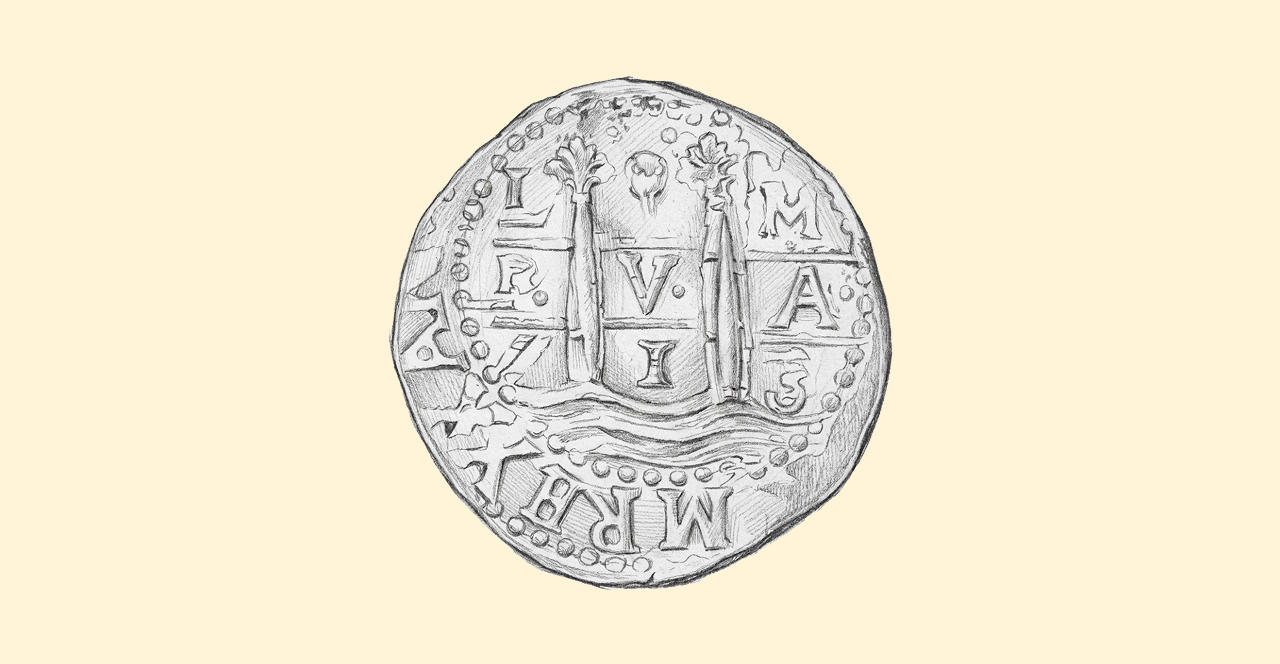 |
| Spanish galleons were the original precious metals ETFs. (Read more below.) |
|
|
|
| Three numbers that explain the economic moment. |
|
| 20 million barrels |
| That’s how much oil typically leaves the Persian Gulf through the Strait of Hormuz each day, about a fifth of global supply. Iran, situated on the northern side of the strait, has responded to US and Israeli air strikes by threatening to attack any vessel that tries to make the trip. Shipping has all but stopped, and the price of a barrel ($67 before hostilities began) could surge as high as $120, per some estimates, if the shutdown lasts longer than 25 days. Natural gas production in the Middle East has been disrupted by attacks, too. |
| |
| 18% |
| The amount that South Korea’s Kospi stock index fell over two days this week, which included its largest single-day drop ever, amid global concern that energy-market chaos could hurt economies that depend on imported fuel and drive worldwide inflation. Stocks in Japan, Taiwan, and Hong Kong also dropped, as did those in Europe and the US. So did the markets for existing bonds and gold. (If central banks raise interest rates because of inflation, new bonds will be issued at higher rates, making other “safe-haven” assets relatively less appealing). |
| |
| 53 points |
| That’s how much the S&P 500 rose Wednesday, a gain of 0.78%; other indexes also stabilized, at least for the time being. (Information in this newsletter is accurate as of publication time but is subject to change.) Observers concluded from this that the market currently thinks the war will be relatively short, something in the range of a month. Regardless, it’s worth remembering that panic selling when stocks drop has historically been a losing strategy, which is why it’s called panic selling, because the market has previously recovered even from the most severe crises. |
|
|
|
| IRL is still a pretty big deal. |
|
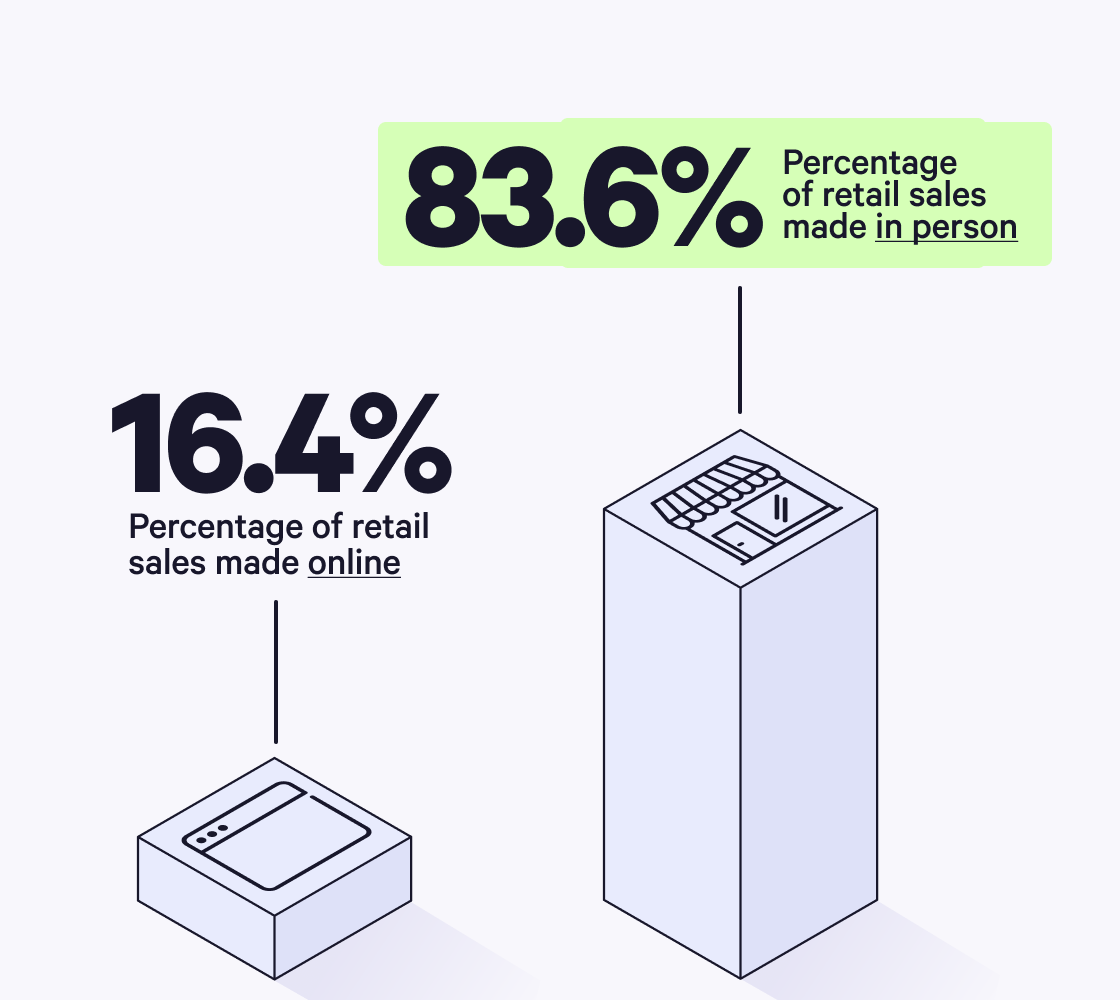 |
| Source: Quarterly Census data (and no, this doesn’t include groceries). |
| Online retail is the future, sure—Amazon’s market cap is more than $2 trillion, although some significant portion of that value comes from its web-hosting service. Also still doing quite well, though? Physical stores, which are led in U.S. sales by Walmart, newly worth $1 trillion itself. (Though admittedly, that’s partly because of its move into online shopping and delivery.) |
|
|
|
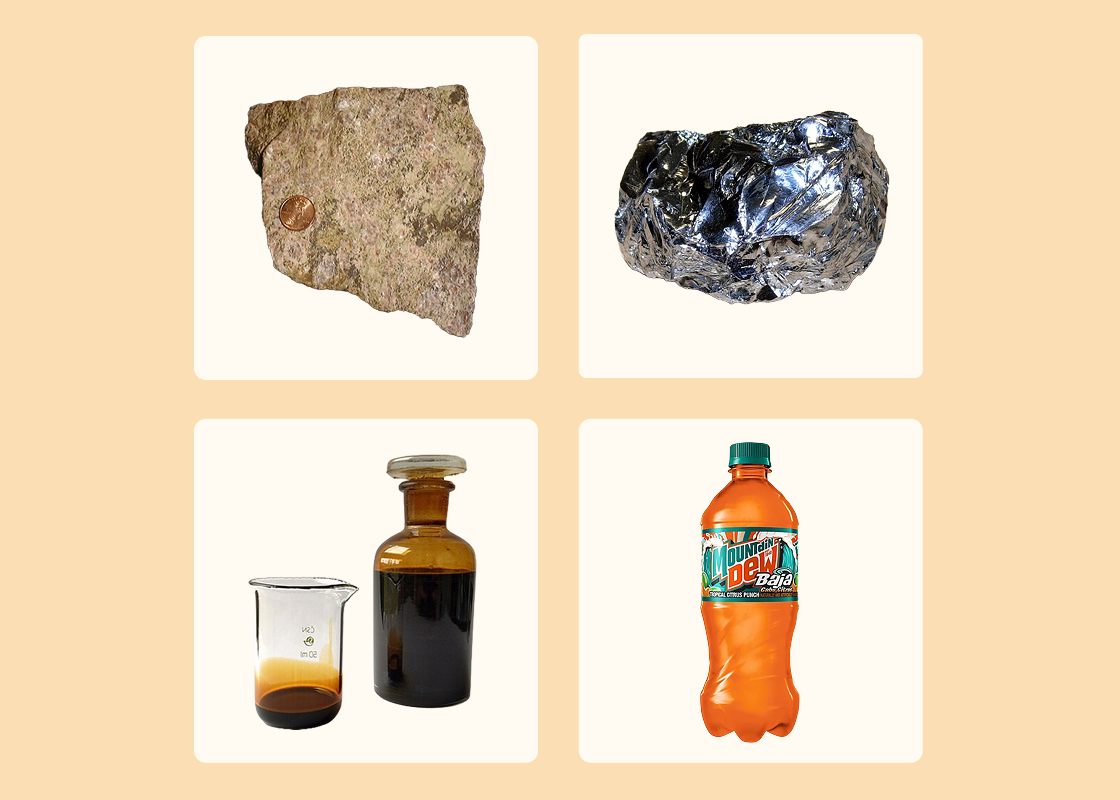
| Which of these materials is a semiconductor? |
|
|
|
|
|
| The answer: The one in the upper right, which is a chunk of silicon. Silicon can block or conduct electrical current depending on how it’s combined with other elements, so it’s an ideal base for the interconnected on-off switches that make computer chips work. Which is to say: Demand for that silver rock drives a great deal of stock market froth. The others, clockwise from upper left: Ore that contains rare-earth metals, which are also quite critical in tech; a delicious and invigorating beverage; and crude oil. |
|
|
|
| Is looking for gold on the floor of the ocean a good investment? |
|
|
|
|
|
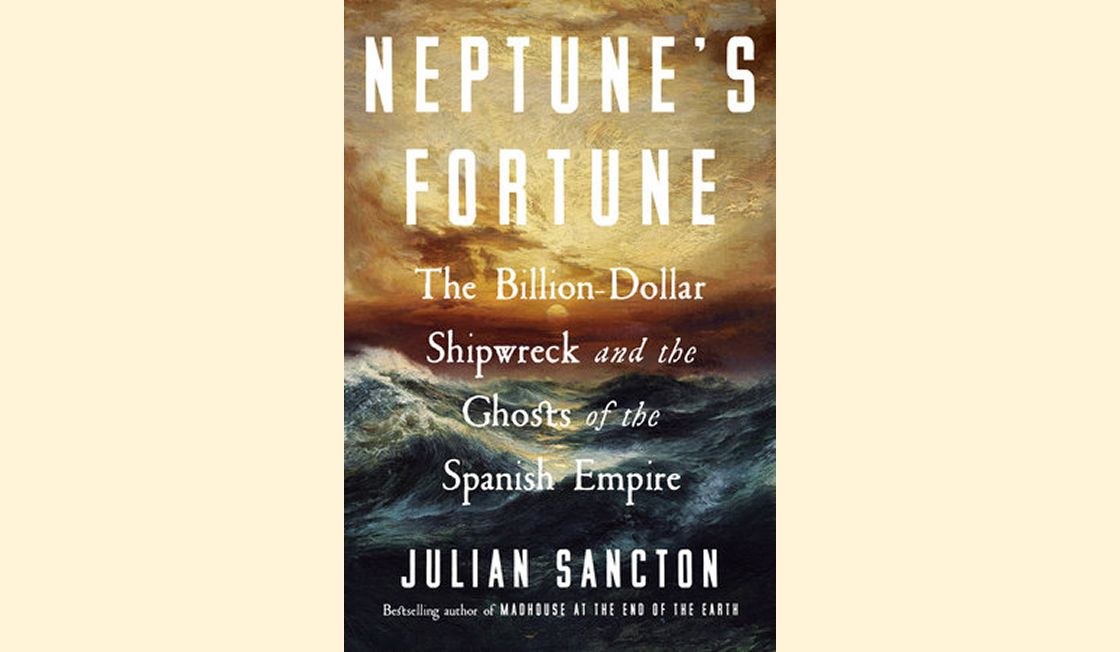
Julian Sancton is the author of Neptune’s Fortune: The Billion-Dollar Shipwreck and the Ghosts of the Spanish Empire, the story of a self-trained Cuban American archeologist who spent decades hunting for a galleon (the San Jose) that sank off the coast of Colombia in 1708 with an estimated $1 billion in silver and gold aboard. (Timely!) We spoke to him about the perennial demand for precious metals and the enduring human interest—often an irrational one, as far as return on investment goes—in trying to make a big score.
The subject of your book is a man named Roger Dooley who found out about the San Jose while working for Fidel Castro in 1984. Having fled to the U.S. in the ’90s, he convinced the Colombian government to let him lead an expedition to look for it in 2015. But who pays for this kind of thing? How much does it cost?
There was a golden age of treasure hunting, starting in the late ’50s with the development of scuba technology, in which it was less formalized and more adventurous. But then it got more structured, and by the mid ’70s there were teams of respectable investors involved. A company called Glocca Morra tried to find the San Jose in the early ’80s, and it was backed by a lot of button-down coat-and-tie Wall Street types who had made money in a prior hunt for something called the Concepción.
Dooley’s two expeditions cost about $7 million—it can cost up to $100,000 for a day on the water. They leased a state-of-the-art Norwegian survey ship called the Seabed Prince and had all sorts of underwater robotics. It was funded through an LLC by an executive at the Marshall Wace hedge fund in London named Anthony Clake, who’s always had an interest in shipwreck hunting and investing in treasure hunts.
We’re not spoiling anything to say that Dooley found the ship, which is near the port of Cartagena. But all the treasure is still on the ocean floor, right?
Clake and the Colombian government had a deal that would’ve legally entitled him to 45% of any treasure recovered, excepting a few coins that were going to be considered cultural heritage and kept for study. But before the president who had championed the project could greenlight an expedition to actually bring up the treasure, another administration came in and declared that the entirety of the wreck and its contents was cultural heritage, and therefore could not be sold or shared. So Clake is suing, although at this point all he wants is for the Colombian government to refund what he spent on the expedition. Dooley has proposed putting it all in a museum.
So does anyone actually make money from finding buried treasure?
As they say, you make more money selling shovels than you do digging for gold. People who make money in treasure hunting, by and large, are the ones who find investors to back their expeditions, rather than the investors themselves. You make more selling the dream of treasure hunting than you do by finding it. It’s not all that different from gambling or thinking you’re one trade away from being the next Warren Buffett, but it’s at least a very exciting way to lose money, and to some extent you can use it to save on taxes.
Where does the estimate of $1 billion in gold and silver aboard the San Jose come from?
It’s my own attempt to determine how much the meltdown value of the coins would be. There’s no manifest; we know what was destined for the king, but we don’t know what other people were smuggling along with it. But from my research, I estimate there was somewhere between 7 million and 12 million pesos aboard, and knowing the coins’ weight in ounces, at the very lowest end it would be worth a billion dollars. If it’s on the high end of that range, it would amount to about two billion. And there were emeralds and pearls too.
You had good timing for this project, in that you couldn’t have known when you started that there’d be another rush to stock up on silver and gold amid global competition between great powers.
For however much we’ve created these fancy new financial instruments, we’ve remained fascinated by gold and silver. Gold drove the conquest of the New World, and people have historically reverted back to it because they think its value has proven to be stable.
You could say gold is valuable because it doesn’t oxidize, but when you get to the heart of it, it’s not a particularly useful metal. The main thing that makes it valuable is its scarcity and its shininess. Every time I think the price won’t rise any more, though, it keeps rising. I wish I could go down and take some from the San Jose myself, because I do know the coordinates. But it’s too deep to dive to.
This interview was edited and condensed for clarity. |
|
|
|
|
|
# of mentions of AI in this issue: 1 (implicit, re: stock market froth)
# of mentions of crypto in this issue: 0
# of mentions of Fidel Castro in this issue: 1 |
|
|
|
|

 Link copied!