The
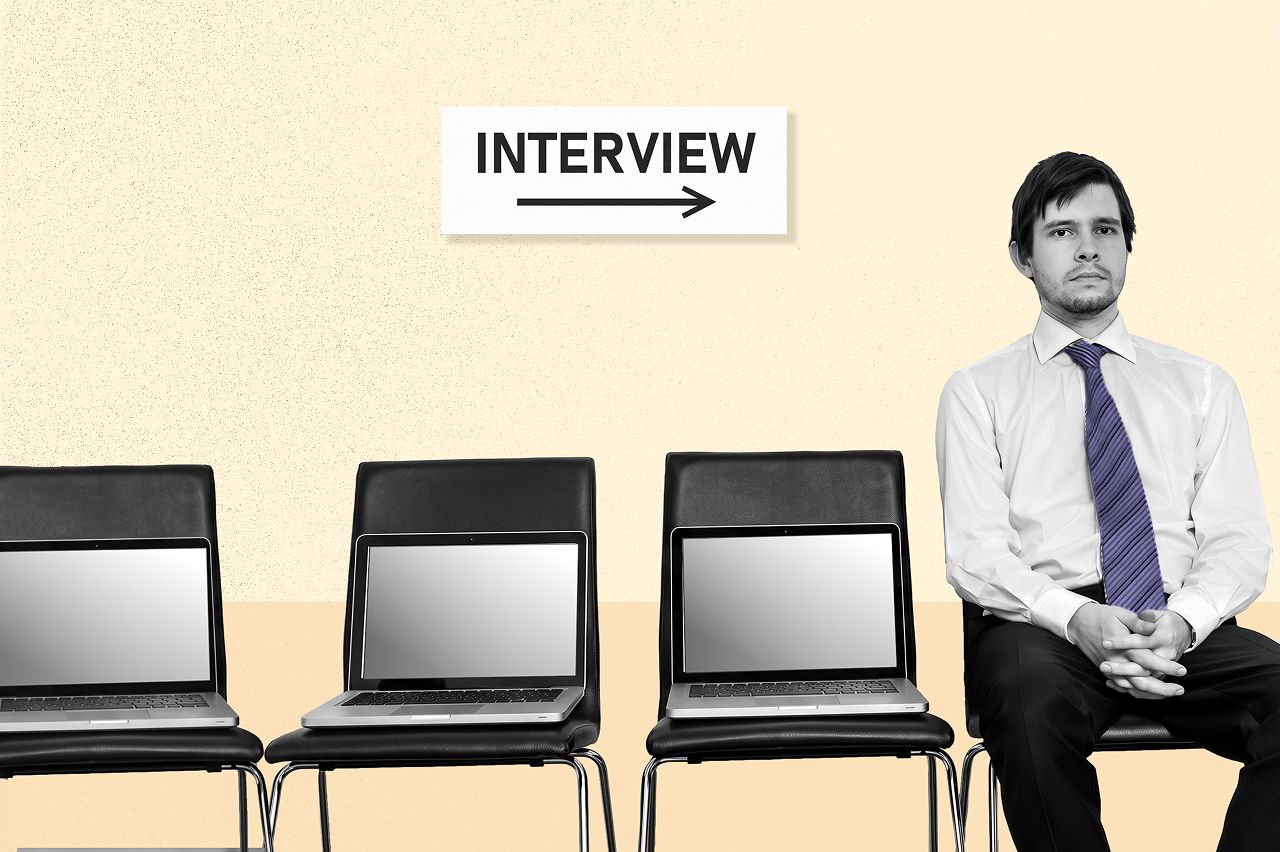
internet is right: The job market has been tough for recent college graduates. The latest data compiled by the
Federal Reserve Bank of New York found a 5.6% unemployment rate among 22- to 27-year-old grads, more than a point above the rate in the general population. Unemployment among those holding bachelor’s degrees is higher than that among workers in specialized trades (plumbers, electricians, etc.) for the
first time in 50 years.
At the same time, companies such as Microsoft, Meta, and Oracle have been
citing artificial intelligence as the impetus for eliminating tens of thousands of white-collar jobs. (Microsoft announced a buyout program last week.) Put these two trends together and it’s not surprising that Gen Z is more worried about AI’s effects on its career prospects than any other age group. In
one recent survey, 81% of the demographic’s respondents said they believed the technology would reduce the number of jobs available to them—the highest proportion of any generational cohort.
But hang on for a minute, fellow kids
While there’s some evidence that large language models have
slowed the rate at which junior programmers are being hired, lots of people within tech think the companies blaming large-scale layoffs on LLMs are “AI washing,” i.e. seizing on a buzzword as an excuse for cost-cutting they
want to do anyway. (Layoffs are problematically popular with shareholders these days.) In McKinsey’s most recent
survey, only 7% of firms reported having fully “deployed” AI across their operations, while two-thirds said they hadn’t begun “scaling” its use at all. Those aren’t the kinds of adoption rates that suggest imminent mass unemployment.
Research by the University of Pittsburgh’s Morgan Frank about the broader job market, meanwhile,
finds that college grads were already having difficulty securing jobs before ChatGPT was released in late 2022—and that their level of employment has not fallen any further since. (Other
studies have had similar results.) In Frank’s view, what we’re seeing is a response to COVID-era misjudgment rather than LLM-driven obsolescence. “I think you had this pandemic economy where everything was online, and companies needed to hire people who could work digitally to build digital products and services,” he says. “And then the world switched to the current economy, so we're seeing corrections for hiring during the pandemic years.”
A survey conducted for a
working paper co-authored by a Federal Reserve Bank of Chicago economist found that even professionals within the AI field don’t expect US GDP to change significantly in the next five years as a result of the technology. In fact, the AI insiders projected collectively that GDP will continue to grow through 2030 at the same 2.5% annual rate that it’s averaged for the past
30 years. GDP and employment aren’t the same thing—perversely, again, faster AI advancement could mean fewer jobs—but the forecast still implies the most
extreme AI-disruption scenarios are not the most
likely.
And it turns out nihilism-driven self-destruction has some downsides
Also: Economic doomerism can have tangible consequences. A recent
study by economists at the University of Chicago and Northwestern found that pessimism about one’s ability to afford a home—which is
common in Gen Z—corresponded with a host of risky financial behaviors ranging from speculating on crypto to saving less money to giving less effort at work. (Gallup has also found that young people these days are
unusually disengaged from their jobs.)
But AI might turn out to be a flop, or to create more new jobs than it eliminates—robot supervisor, robot repairperson, robot therapist, etc. (The rate of new business formation is, in fact,
increasing.) 2025’s young-grad problems might turn out to have been cyclical, not structural. Housing prices might fall, as they have many times over the
last century.
Reckless financial nihilists, in such situations, might come to regret earlier profligacy. Northwestern’s
Seung Hyeong Lee, one of the researchers who conducted the pessimism study, notes that over long stretches of time economies and careers usually experience “shocks” of both the negative and positive varieties—and points out that it’s useful to stay prepared for unexpected
good news, too: “If people think that they will be replaceable and stop putting in effort, but two or three years later, their job turns out to be something for which AI has more complimentary, positive effects, they cannot go back and change their path.”
In investing, the conventional response to uncertainty is typically diversification: Putting money into many unrelated assets at once so that you’re in a better position to benefit from whichever ones are successful. The career and personal-finance equivalent of this would be to behave in a way that could benefit you in a range of possible economic futures. (That is: Cultivating earnest, dorky habits like trying hard at work, learning how to do new things, and saving money whenever possible.
Pascal’s Wager for the remote office era, basically.) As economists who study personal finance like to remind everyone, your
future income is an asset too. And with employer surveys suggesting that new-grad hiring is
finally about to pick up, the payoff for dork behavior might come sooner than a lot of skeptical young Americans think.
Share this story

 Link copied!